Africa’s infrastructure future will be decided by execution

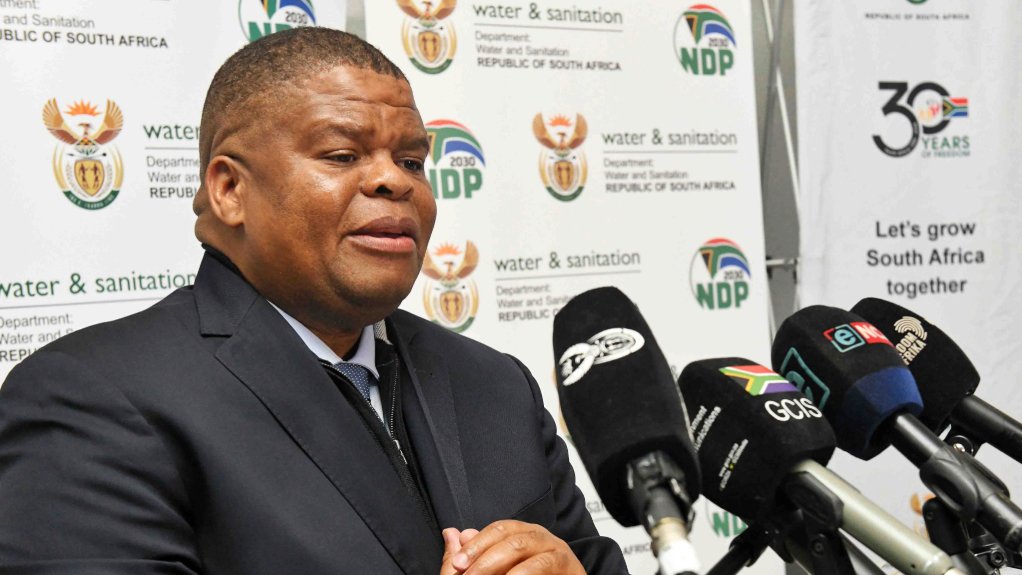


Africa has no shortage of infrastructure plans or vision; however, infrastructure delivery requires more than ambition: it requires execution, Water and Sanitation Deputy Minister David Mahlobo said in an opinion piece on Monday.
Across the continent, governments, regional bodies, development finance institutions and the private sector have produced countless master plans, strategies and policy frameworks aimed at transforming economies through infrastructure-led growth.
“Too often, infrastructure conversations focus almost exclusively on announcing projects,” he commented, noting that real progress will be measured by whether water flows consistently from taps, electricity reaches homes and factories reliably, wastewater systems function properly, trains move efficiently and businesses can produce competitively.
“For Africa, the defining developmental question of our time is whether we can finally move beyond declarations and conference resolutions toward practical implementation that changes the daily lives of our people.”
Despite Africa’s immense economic potential, with a rapidly urbanising population and one of the youngest demographics in the world, major infrastructure deficits continue to constrain growth across much of the continent.
Infrastructure remains the backbone of every modern economy and is the productive foundation upon which economic growth, industrialisation, trade, investment and social development depend.
Without reliable infrastructure, there can be no sustainable economic expansion.
“South Africa’s own experience demonstrates both the dangers of infrastructure decline and the possibilities of recovery through decisive intervention,” Mahlobo said, citing the example of loadshedding, which imposed devastating economic and social costs on the country.
“Many believed the crisis had become permanent. But through policy reform, accelerated investment, regulatory changes, improved operational management and stronger coordination between government and the private sector, South Africa has made significant progress in stabilising the energy sector.”
This, he said, demonstrated that even deeply entrenched infrastructure challenges can be overcome through strategic leadership, institutional coordination and disciplined implementation.
The same lesson now applies to water and sanitation, where the crisis lies not in a lack of water resources, but rather in infrastructure management, governance failures, ageing systems, financial instability and poor maintenance within municipal water services.
Across the country, communities continue to experience recurring water interruptions, sewer spills and declining service reliability even where infrastructure already exists.
“Infrastructure without capable institutions eventually collapses. Pipes alone do not deliver water security. Sustainable infrastructure requires professional management, proper maintenance, financial discipline and long-term operational sustainability,” he continued.
South Africa’s government is therefore pursuing reforms aimed at expanding infrastructure investment and strengthening the institutions responsible for delivering services.
“One of the major lessons emerging from infrastructure failure globally is that maintenance can no longer be treated as secondary to new construction. In fact, one of the cheapest and most effective infrastructure investments often lies in improving efficiency, reducing losses and maintaining existing systems properly.”
Mahlobo said that the broader lesson for Africa is that infrastructure delivery cannot succeed through fragmented approaches.
Governments, development finance institutions, investors, engineers, technology providers and the private sector must increasingly operate as strategic partners within integrated infrastructure ecosystems.
“Africa now stands at an important historical moment. The continent’s future growth trajectory will depend significantly on whether we build infrastructure systems that are reliable, resilient, climate-responsive and inclusive.
“The task before us is therefore clear. We must build institutions that can deliver. We must prepare projects that can attract investment. We must strengthen governance and accountability. We must embrace innovation and partnerships. And above all, we must ensure that infrastructure investment ultimately improves the lived reality of ordinary citizens.”
Africa’s infrastructure future will not be built through plans alone. It will be built through execution, he concluded.
Article Enquiry
Email Article
Save Article
Feedback
To advertise email advertising@creamermedia.co.za or click here
Research Reports

Projects


Latest Multimedia

Latest News


Showroom

For over 60 years, VEGA has provided industry-leading products for the measurement of level, density, weight and pressure. As the inventor of the...
VISIT SHOWROOM
ALBIS FLANGES — founded in 1965 — is a petro-chemical approved manufacturer of flanges and fittings in most grades of steel, listed with Sasol,...
VISIT SHOWROOM
Announcements
What's On
Subscribe to improve your user experience...
Option 1 (equivalent of R125 a month):
Receive a weekly copy of Creamer Media's Engineering News & Mining Weekly magazine
(print copy for those in South Africa and e-magazine for those outside of South Africa)
Receive daily email newsletters
Access to full search results
Access archive of magazine back copies
Access to Projects in Progress
Access to ONE Research Report of your choice in PDF format
Option 2 (equivalent of R375 a month):
All benefits from Option 1
PLUS
Access to Creamer Media's Research Channel Africa for ALL Research Reports, in PDF format, on various industrial and mining sectors
including Electricity; Water; Energy Transition; Hydrogen; Roads, Rail and Ports; Coal; Gold; Platinum; Battery Metals; etc.
Already a subscriber?
Forgotten your password?
Receive weekly copy of Creamer Media's Engineering News & Mining Weekly magazine (print copy for those in South Africa and e-magazine for those outside of South Africa)
➕
Recieve daily email newsletters
➕
Access to full search results
➕
Access archive of magazine back copies
➕
Access to Projects in Progress
➕
Access to ONE Research Report of your choice in PDF format
RESEARCH CHANNEL AFRICA
R4500 (equivalent of R375 a month)
SUBSCRIBEAll benefits from Option 1
➕
Access to Creamer Media's Research Channel Africa for ALL Research Reports on various industrial and mining sectors, in PDF format, including on:
Electricity
➕
Water
➕
Energy Transition
➕
Hydrogen
➕
Roads, Rail and Ports
➕
Coal
➕
Gold
➕
Platinum
➕
Battery Metals
➕
etc.
Receive all benefits from Option 1 or Option 2 delivered to numerous people at your company
➕
Multiple User names and Passwords for simultaneous log-ins
➕
Intranet integration access to all in your organisation